
2026 ABANA Conference Lectures
Jennifer Cochran Anderson
Reviving Women’s Role in the Forge: A Past, Present and Future of Female Blacksmiths
From medieval Europe through colonial America and up to today, women have played significant roles in blacksmithing throughout history. Notable figures include Katherine Le Fevre, who became master blacksmith at the Tower of London in 1346 and Betsy Hagar who used her blacksmithing skills in service of the American Revolution, as well as many others. This talk explores the often-overlooked history of female blacksmiths, what women’s participation in the craft looks like today, and why a future that includes larger numbers of women and other historically underrepresented groups is vital to the continuance of the craft.Images of the Forge in Ancient and Medieval ArtWhen I look at ancient and medieval images of blacksmiths at work, I am always struck by how familiar their shops seem. The hammers, tongs, anvils, forges, all of it, are recognizable enough that I feel that I could walk into their forges 1000 or 2000 years ago and, with a little adjustment, get to work. This talk looks closely at depictions of historic blacksmiths and their shops to explore that remarkable continuity, and what these images can tell us about the craft in the past.
Patrick Nowak
Heat Treating: Traditional and Modern Methods (Lecture Outline)
1. Different thermal cycles and why they are used.
2. Methods of cooling.
3. Selection of quench fluids.
4. Predicting the outcome of your heat treatment.
5. How to select the right heat treatment for various steel grades.
6. Heat treatment the “old fashioned” way.
7. The pitfalls of unintended heat treatment.
Material Selection: Choosing the Right Steel (Lecture Outline)
1. Understanding the needs of a specific application.
2. Understanding what various steels can do.
3. Selecting steel based on heat treat requirements.
4. How to successfully use recycled steel.
5. When to buy new steel.
6. Specific applications: Ornamental, hand tools, power hammer and press tools.
The Metallurgy of Wootz (Lecture Outline)
1. What is Wootz?
2. Why is it interesting?
3. How was it made?
4. What are the challenges associated with replicating it?
5. How is it similar and different to modern cutlery steel?
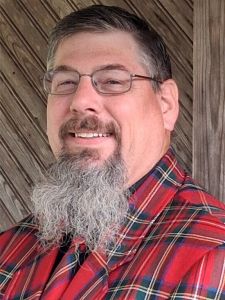
I started making knives via stock removal methods in the early 1990s. Through knifemaking, I was exposed to the field of metallurgy and inspired to pursue that as my career. In the spring of 1997, I was given my first opportunity to forge a knife, and I have been hooked on forging since. After graduation, I spent two years working for Timken, where I focused on the metallurgy of bearings. Following that I joined Scot Forge, the largest producer of open die forgings in North America. My role for the last 23 years has been as plant metallurgist. My specialization is in the forging and heat treatment of carbon, alloy and stainless steel.
Since 2010, I have regularly taught classes on metallurgical concepts associated with forging and heat treatment to hundreds of my colleagues. These team members have a wide variety of education and experience backgrounds, so I have developed a teaching style and vocabulary designed to be effective with diverse audiences. In 2020, I started writing a book on metallurgy to address many of the questions I have received from my fellow blacksmiths and knife makers. That book, Metallurgy for Blacksmiths and Knifemakers, is nearly done and will be available via Artisan Ideas soon.
In addition to my work in industry, I have a blacksmith shop at home equipped with large Bradley mechanical power hammers. My blacksmith work is focused largely on precision forging of mokume gane billets for use in custom knives and other decorative applications. I also enjoy the challenge of forging complex shapes from single pieces of material and making and using tools that maximize the utility and capability of power forging equipment. My home shop has served as a “training lab” for many engineering students who otherwise would be limited to learning by observation. I am truly blessed to have professional and personal passions that overlap nearly 100%.
Paul Siebenthal
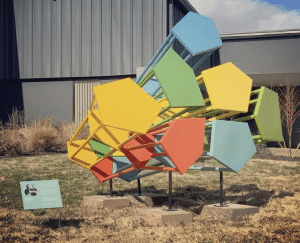
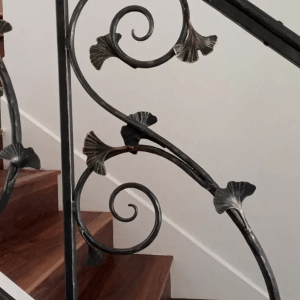
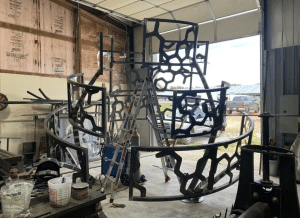
Creative Metals and FunMaking a career in any crafts or arts discipline should be a bunch of fun experiences and should be enjoyable. Some work and personal experiences related to a life pursuing creative metals. Ideas and resources for artists, as well as a subjective look at public art and functional metalwork.
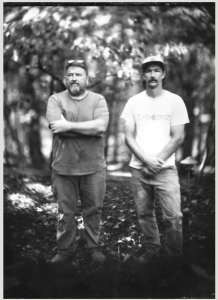
Paul Siebenthal grew up on the central coast of California. His grandfather, father, and uncles were all union pipefitters and welders, and metal fabrication was a part of his family identity. Paul is a veteran, and has a BFA in Metalsmithing/Blacksmithing from SIU–C (2000), an MFA in Sculpture from University of Notre Dame (2004). Paul has worked in metal-art studios in Austria and Germany, taught as an Adjunct Art Instructor, worked as a Mountmaker and Art Preparator, and for a contemporary architecture firm as a Visiting Artist. Paul is currently a full time studio artist in Fayetteville, Arkansas.
Jerry Gardner
Beyond the Anvil: Creating a Blacksmith Non-Profit Program to Foster Connection and Impact Local Communities
Practical lessons from Forging A DifferenceBlacksmithing has the unique ability to bring people together, build confidence, and create meaningful connections within a community. This presentation will explore how blacksmiths, shops, and organizations can develop programs that use the craft to serve others and make a lasting community impact. Using Forging A Difference—a nonprofit serving veterans, law enforcement, first responders, and their families—as a case study, Jerry Gardner will share lessons learned about developing programs, building community partnerships, securing funding, and measuring impact. Attendees will leave with practical ideas and a framework for using their own skills, shops, and passion for blacksmithing to make a difference in the communities they serve.
Jerry Gardner is a blacksmith, educator, and founder of Forging A Difference, a 501(c)(3) nonprofit in Daphne, Alabama, that uses blacksmithing and other hands-on crafts to support veterans, law enforcement officers, first responders, and their families.
Jerry is also the founder of The Blacksmith Experience and an ABANA Level 1 certified instructor. Through years of teaching blacksmithing and knife making, he began to see that the value of time spent around the forge often extended far beyond learning how to shape steel. The process of working with your hands, focusing on the task in front of you, sharing a meal, and working alongside others created opportunities for connection, conversation, confidence, and a sense of belonging.
That realization helped lead to the creation of Forging A Difference. Its programs combine hands-on blacksmithing and knife making with intentional opportunities for fellowship and meaningful conversation. The organization has developed programs ranging from introductory forge experiences to more in-depth classes designed to build lasting relationships and community.
Jerry is passionate about helping other blacksmiths recognize the unique ability of the craft to serve people. His work demonstrates that a forge can be more than a place where steel is shaped—it can also be a place where relationships are built, barriers come down, and people find connection and purpose.
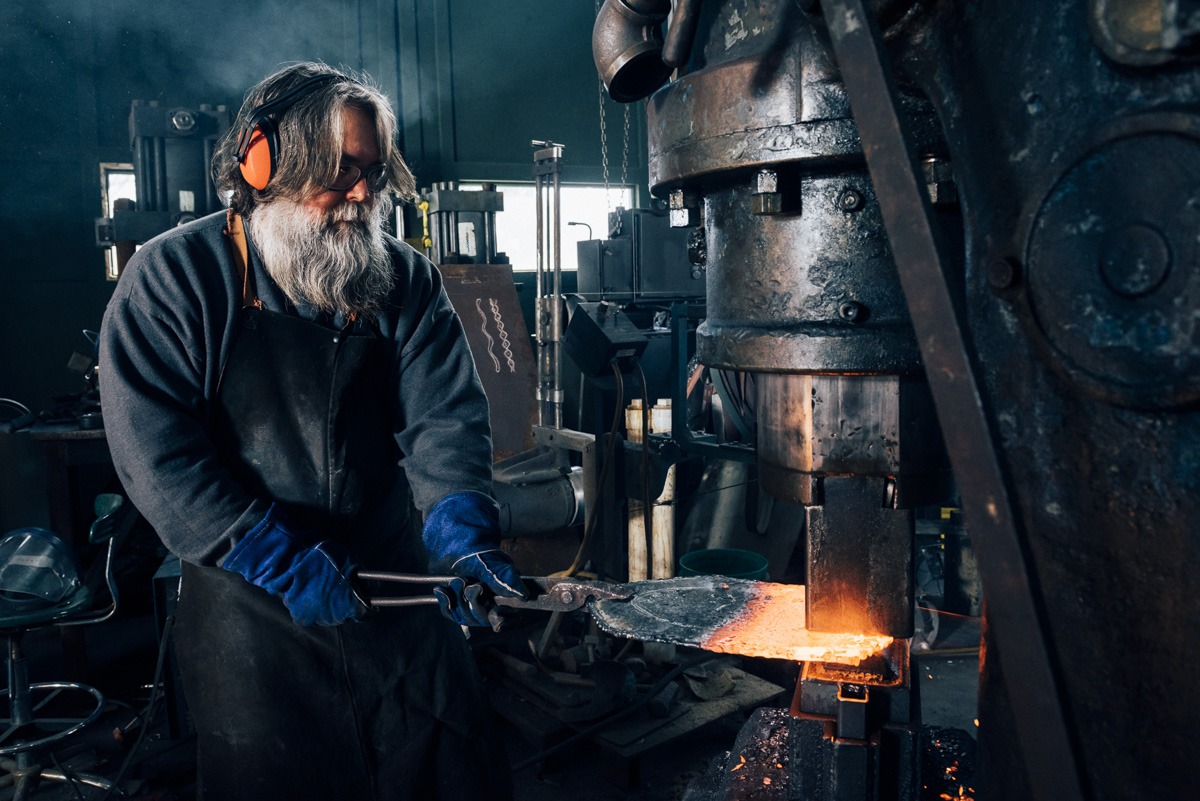
Ric Furrer will produce a wootz bloom and forge a billet demonstrating the critical characteristics to make a finished knife.
More details to come!