
Tips to Increase Sales
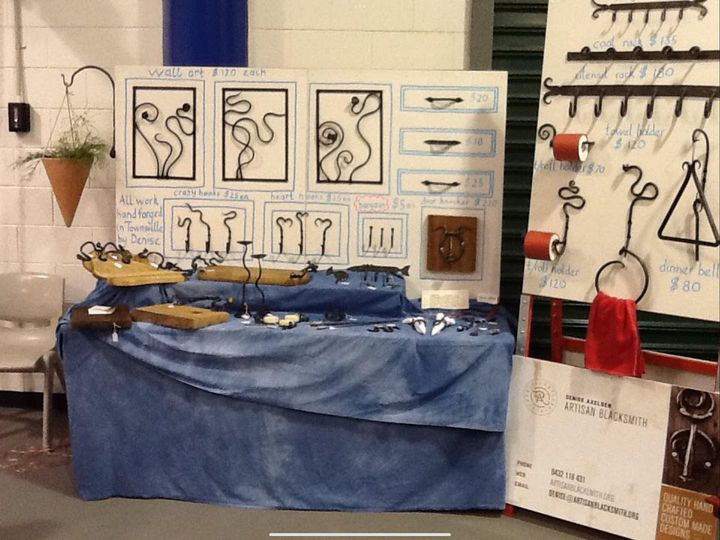
The white, vertical backdrop shows off the black ironwork to full advantage.
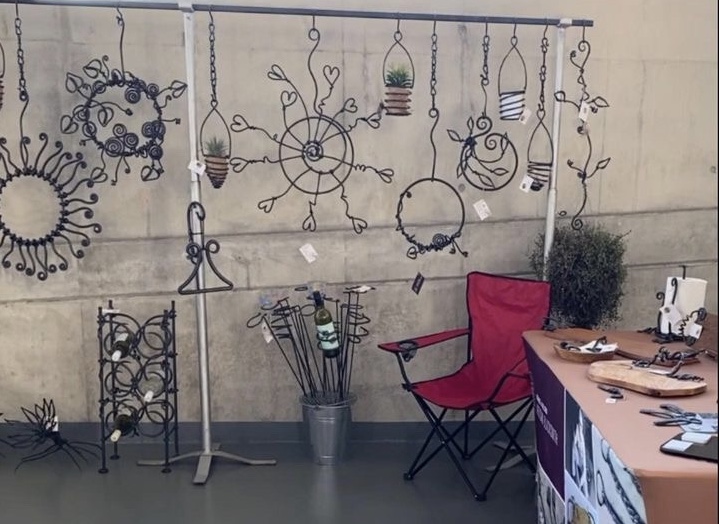
Denise Axelsen‘s table displays make use of vertical space and show products in use.
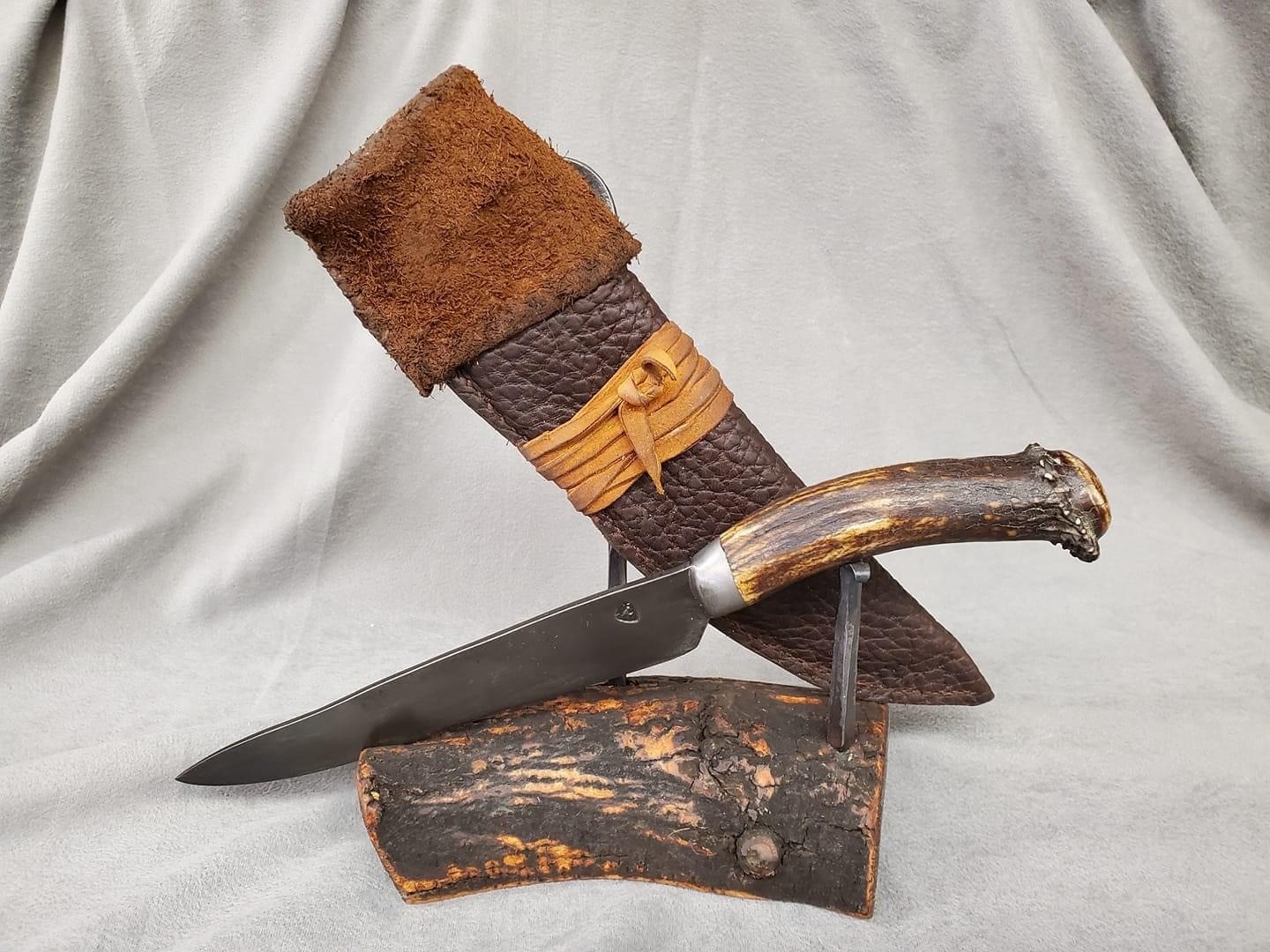
Roger Wright displaying his knife with a thematically relevant stand.
Attract Customers with Better Displays
You’ve spent hours and hours in the shop making items to sell. You’ve loaded up your vehicle with tables and price lists and merchandise. Now is not the time to sabotage your efforts with an uninviting display. Here are a few tips to take your table design to the next level:
Basic Setup
- Use a tablecloth that goes all the way to the ground. It makes your table look more polished and professional and provides a place to hide any backstock, your lunch, etc.
- Hang your sign or banner overhead when possible. When you hang it off the front of your table, it gets covered up when people are standing at your table. Hanging it overhead allows people to read your business name at all times, even from a distance.
- Forged pieces are typically very dark so consider what is in the background. Clean, uncluttered backgrounds in a contrasting color work best.
- Don’t ignore the ends or sides of your table. Depending on traffic flow, the ends of your table or the sides of your booth may be the first glimpse potential customers see. Is your display just as appealing from that angle as it is looking at the display straight on?
Go Vertical
- Pick a few key pieces and get them off the table surface by making a stand or hanging on a wall.
- Going vertical also fills more of the customer’s field of vision with product (vs. empty space).
Use Multiple Levels
- Stage products at 3 different heights – the table surface counts as one height, so find ways to elevate items at two staggered heights. It can be as easy as putting a sturdy shoebox under your tablecloth to create height. There are also various products, like plexi risers, which accomplish the task.
- Play with composition to creates angles or “V” shapes with product to lead the eye around your display. In other words, don’t make everything the same height.
- Use props to create a theme or story in your display. Fur, burlap, and leather, for example, are fabrics and textures that pair well with rustic items. But just because it is forged steel, doesn’t automatically make your product “rustic”. Your items might pair better with an elegant looking table or a fun, quirky display. Remember: You’re creating a retail display, not a stockroom, so be aware of the mood and tone of your display.
Be Selective
- If you have 12 of the same item, concentrate on displaying 1 or 2 to their best advantage and backstock the rest out of sight. Scarcity can increase the perceived value of the item.
- Limit the number of iterations on a product. Studies have shown that less is more and consumers are more likely to make a purchase when faced with fewer choices.
Pro Tip: Getting your wares into a person’s hands increases the likelihood they will make a purchase. So invite them to touch and pick up items when appropriate.
Knife display by David W. Osmundsen of Arrowhead Forge School of Blacksmithing in Wyoming.
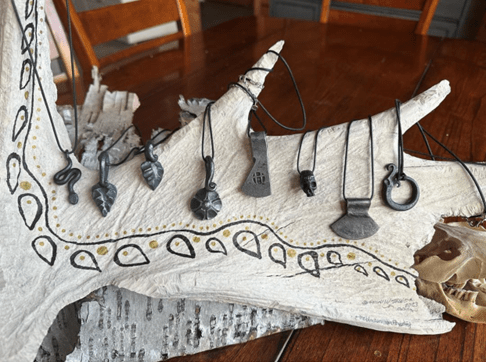
Pendants by C. Johnson of Adventure Forge displayed against an antler painted by Giiniw-Ikwe an indigenous Ojibway artist from North Western Ontario.
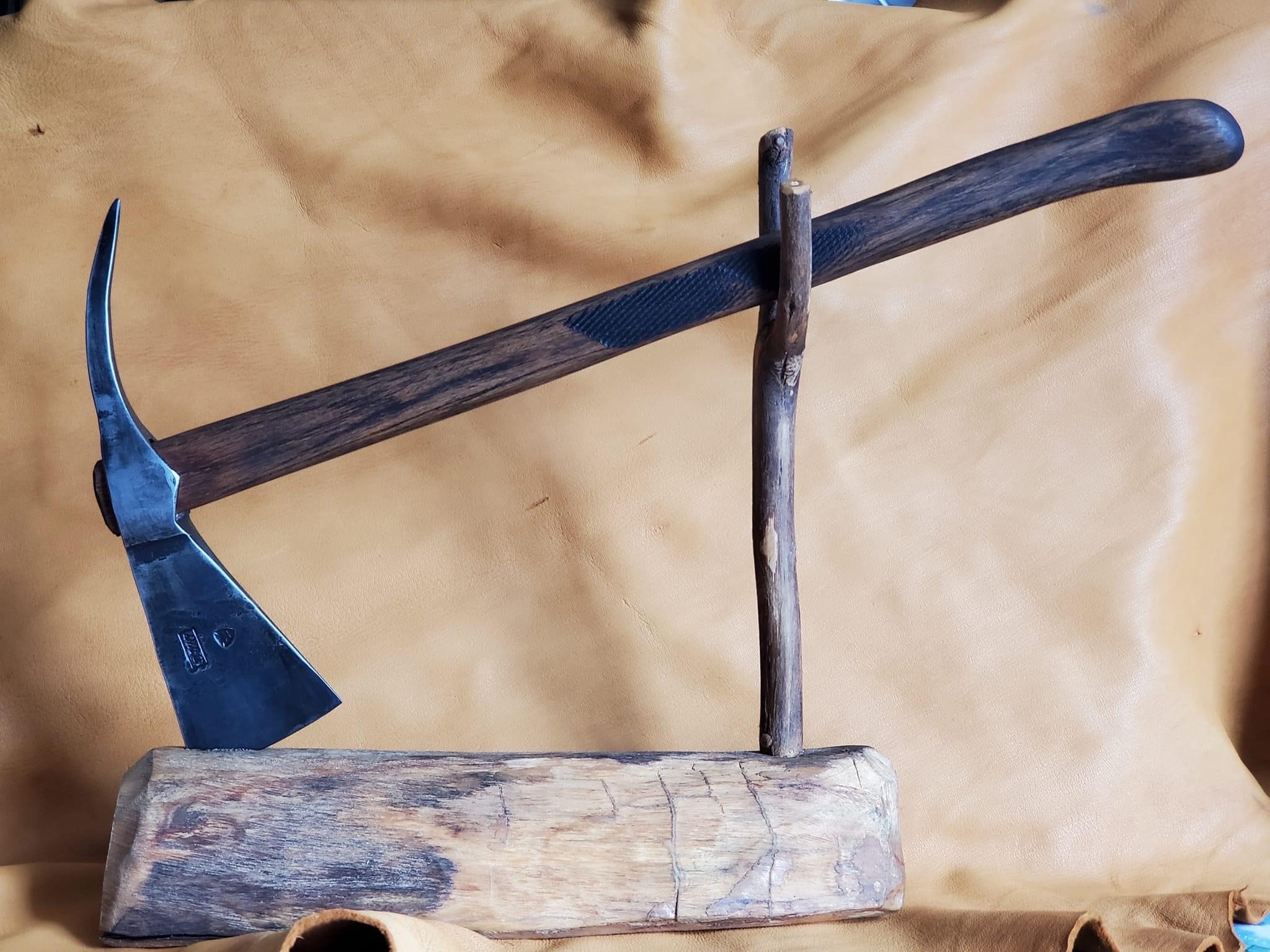
Displaying this spike tomahawk above the table surface with a style-appropriate stand makes it visible from a distance which attracts viewers. Forged by David W. Osmundsen.
Note: This article contains an affiliate link. We earn from qualifying purchases at no additional cost to you.